
Neurofeedback Therapy in Houston: Train the Brain That Trauma Rewired
Neurofeedback is non-invasive, medication-free brain training. We begin with a qEEG brain map to see how your nervous system is actually behaving, then build a training protocol from that data. At Connect Clinical Services, neurofeedback sits alongside EMDR, Brainspotting and somatic therapy in one practice, so the brain training and the trauma work happen in the same plan.
Private pay. Neurofeedback assessment $150, qEEG brain map $1,200. Training session fees are quoted on your call. We do not bill insurance. Superbills provided on request, and what your plan reimburses depends on your coverage.
qEEG brain mapping
Medication-free and non-invasive
The Science
What neurofeedback actually is, without the hype
Neurofeedback, also called EEG biofeedback, is training rather than treatment in the usual sense. Sensors on the scalp read the electrical activity your brain is already producing. Nothing is sent into your brain. When your brain produces the pattern we are training toward, the video you are watching stays bright and the sound stays clear. When it drifts, the screen dims. Your brain notices that, and over sessions it learns to hold the steadier state on its own.
That matters for trauma specifically. A nervous system shaped by trauma tends to sit in hyperarousal: fast, watchful, poor at settling, poor at sleeping. You cannot reason your way out of that, which is why people who understand their triggers perfectly still cannot sleep. Neurofeedback works below the level of insight, at the level where the dysregulation actually lives.
It is also the piece that makes the rest of our work land better. A brain closer to its window of tolerance can do EMDR or Brainspotting without getting flooded. That is why our clinical director frequently recommends starting here for clients with chronic hyperarousal, insomnia, emotional volatility, or symptoms that have not moved with talk therapy.
The honest version of the claim
A standalone brain-training clinic can help regulate your brain’s electrical patterns. Because CCS runs neurofeedback, EMDR, Brainspotting, and Somatic Experiencing under one roof, we can also work on the material that drove the dysregulation in the first place. Results vary from person to person, and no responsible practice will promise you an outcome.
How It Works
Four steps, starting with data
We do not guess at a protocol. Every training plan at our Houston office is built from your own brain map and reviewed against your broader therapy goals.
qEEG brain map
A quantitative EEG assessment records your brainwave activity and compares it against normative data. The map shows where your brain is over-active, under-active, or unstable. This is the foundation for everything that follows.
Protocol design
Your map is read alongside your history and your therapy goals, and a training protocol is designed from both. The brain map tells us what to train. Your clinical picture tells us why, and in what order.
Training sessions
Sensors are placed on the scalp. You watch a film, play a simple game, or listen to music while the system responds to your brainwaves in real time. Most people find the session itself unremarkable, which is the point.
Re-map and adjust
Progress is checked against repeat brain maps rather than memory alone. Protocols are adjusted as your brain changes, and neurofeedback is paired with trauma processing when you are ready for it.
Your Neurofeedback Team
Who runs the brain training at Connect Clinical Services
Neurofeedback at CCS is not handed off to a technician working from a template. Protocols are designed under clinical direction and delivered by a named team you can look up.

Guy Bender, LPC
Clinical Director and Owner
Guy has spent more than 16 years in trauma work, beginning as a trauma specialist at a treatment center in Arizona. He trained with Richard Schwartz, who founded Internal Family Systems, and Peter Levine, who originated Somatic Experiencing. He designs the neurofeedback protocols at CCS and reads them against the whole clinical picture, not just the brain map.
He is also the person deciding what belongs in your plan and in what order, including when neurofeedback should come before trauma processing rather than after it.
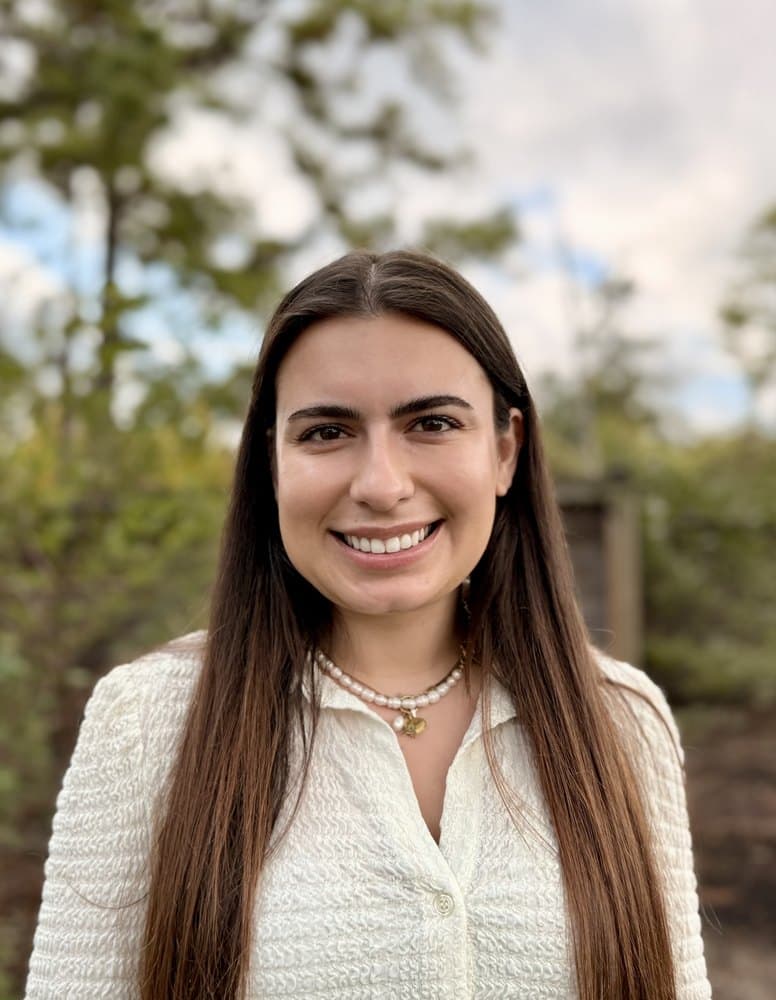
Autumn Jeria, LPC Associate
Neurofeedback Coordinator
Autumn coordinates the neurofeedback program at CCS and is often the person you will see across a course of training. She earned her Bachelor’s in Psychology from the University of Texas at San Antonio and her Master’s in Clinical Mental Health Counseling from the University of Houston-Clear Lake.
Brain science has been the through-line of her training: emotional regulation, the stress response system, cognitive processing, and neurodevelopment. She explains what the map is showing in plain language, which matters most with kids and teens, where the problem often gets read as a character flaw instead of a nervous system doing its job badly.
Autumn Jeria is a Licensed Professional Counselor Associate practicing under the clinical supervision of Hope Torres, LPC-S.
“What we’re working with is how trauma gets stuck in our nervous system.”
Guy Bender, LPC, Clinical Director
Credentials and Standards
The training and affiliations behind the protocol
Neurofeedback is a lightly regulated field, and quality varies widely between providers in Houston. These are the credentials and professional standards our work is held to.
Texas state licensure
Every clinician at CCS holds an active Texas behavioral health license and practices under the Texas Behavioral Health Executive Council. Associate-level clinicians practice under a named board-approved supervisor, stated on every page.
ISNR
The International Society for Neurofeedback and Research is the field’s primary professional and research body. Its published standards and peer-reviewed literature inform how protocols are designed and reviewed here.
EMDRIA
EMDR International Association is the credentialing body for EMDR therapy. Nearly every clinician at CCS is EMDR-trained, which is what allows brain training and trauma processing to be planned together.
Brainspotting International
Brainspotting training through the international body founded by David Grand. Relevant here because Brainspotting is frequently the processing partner to neurofeedback for clients who are too activated for other approaches.
Psychology Today verified
Every CCS clinician holds a Psychology Today verified listing, where license type, license number, and supervision status are independently checked against state records.
Measured, not asserted
Progress is tracked with validated instruments (PCL-5, PHQ-9, GAD-7) and repeat qEEG brain maps. You should be able to see what changed rather than take our word for it.
What Our Clients Say
Real reviews from Houston clients
Published reviews from Google. We do not offer anything in exchange for a review, and we never confirm who is or was a client.
“My mind continues to improve processing abilities and become more efficient with each passing week. I HIGHLY recommend working with Connect Clinical Services and their team! Don’t hesitate, you will not regret it.”
Neurofeedback client, Google review
“This is a great center for helping people with various issues, utilizing EMDR and other forms of neurofeedback and therapy! Great resource here in Houston.”
EMDR client, Google review
“Best collegiality ever! I really enjoy going and make a point to put it in my schedule.”
Group therapy client, Google review
4.8 stars from 23+ reviews on Google. Read all reviews
What Neurofeedback Addresses
Where brain training tends to do the most work
Neurofeedback is not a cure and it is not right for everyone. These are the areas where it is most commonly used at our Houston practice, and where the research base is strongest.
| Area of function | What neurofeedback trains toward |
|---|---|
| Sleep | Falling asleep more easily and staying asleep. Sleep is commonly the area clients name first. How quickly that happens varies and is not something we can promise. |
| Anxiety and hyperarousal | A calmer baseline, fewer panic episodes, less chronic irritability. The training targets the specific patterns your map identifies rather than a generic protocol. |
| Attention and ADHD | Focus, attention span, and executive function. qEEG helps distinguish true ADHD from anxiety-driven or trauma-driven attention problems, which are treated differently. |
| Trauma and PTSD | Reducing the hypervigilance that makes trauma processing feel unsafe. Often used to build a stable enough baseline for EMDR or Brainspotting to proceed. |
| Depression | Specific brainwave patterns are associated with depressive presentations. Training can shift those patterns, with changes commonly reported in energy and motivation. |
| Peak performance | Executives, athletes, and students training for focus, decision speed, and stress tolerance rather than for a clinical problem. |
Not sure whether neurofeedback is the right starting point?
That is what the call is for. A short, no-pressure discovery call with a member of our care team. We listen to what is going on, talk through your options, and match you with the therapist best suited to you and your budget. No pressure, no obligation.
(713) 564-5146 • 8100 Washington Ave, Suite 170, Houston TX 77007
What To Expect
Your first step, described honestly
Your first step is a short, no-pressure discovery call with a member of our care team. That might be Dorothy, our client care coordinator, or Guy Bender, LPC, our clinical director. There is nothing to prepare and nothing to commit to. In about 15 minutes we listen to what is going on, help you understand your options, and match you with the therapist whose specialties and approach best fit your situation. You leave with clarity and a clear next step. If we are not the right fit, we will tell you and point you in a better direction.
Practical details
Neurofeedback requires in-person attendance, so this is one of the few services we cannot deliver by telehealth. Sessions are at 8100 Washington Ave, Suite 170, in the Washington Corridor near the Heights, with free on-site parking. Connect Clinical Services is private-pay and does not bill insurance. We provide superbills for out-of-network reimbursement, and what your plan reimburses depends on your coverage.
A typical course runs 20 to 40 sessions depending on the presentation, and sleep is the area clients commonly name first. That range is drawn from clinical experience and the literature. It is not a prediction about you, and no honest provider can promise you a session count in advance.
Cost and Payment
What neurofeedback costs here, printed rather than promised on a call
Connect Clinical Services is private pay. We do not bill insurance, and we would rather you learn that here than on the phone. Neurofeedback is a course of work, not a single appointment, so the honest way to read this table is as a commitment rather than a session fee.
| Step | Length | Fee |
|---|---|---|
| Initial consultation, phone or Zoom | 15 minutes | No charge |
| Neurofeedback assessment | 45 to 60 minutes | $150 |
| qEEG brain mapping | 75 to 90 minutes | $1,200 |
| Training sessions | Typically 20 to 40 across a course | Quoted on your call |
The brain map comes first and it is a paid diagnostic, not part of the consultation call. We would rather you know the number before you call than after. HSA and FSA cards are accepted. The full rate card for every service and clinician is published at our costs.
You pay at the time of service and we email you a superbill with the codes your insurer needs. You submit it. What comes back, if anything, depends on your plan’s out-of-network benefit, and that is between you and your insurer. How out-of-network benefits work.
Common Questions
Frequently asked questions about neurofeedback in Houston
Is neurofeedback safe?
How many sessions will I need?
Can neurofeedback replace my medication?
How is this different from a standalone neurofeedback clinic?
Does neurofeedback help teens with ADHD?
Do you accept insurance?
Can I do neurofeedback by telehealth?
What happens on the free call?
Start with a brain map, not a guess
If you have tried therapy and understand your patterns but the sleep, the anxiety, or the focus has not moved, the problem may not be insight. It may be regulation. A qEEG brain map is where we find out.
Request a call and a member of our care team will get back to you, usually within 24 hours and often the same day.
Serving The Heights, River Oaks, West University, Bellaire, Tanglewood, Memorial, Bunker Hill Village, Montrose, Upper Kirby, Woodland Heights, Rice Village, Galleria, Braeswood Place, Southside Place, and Sugar Land. Neurofeedback is in-person only.
Reviewed by Guy Bender, LPC, Clinical Director of Connect Clinical Services, August 2026. This page is educational and is not a substitute for clinical assessment. Individual results vary. If you are in immediate danger or crisis, call or text 988, or go to your nearest emergency room.