
Connect Clinical Services | Houston, TX
Neurofeedback for ADHD in Houston: A Medication-Free Approach That Trains the Brain to Focus
By Guy Bender, LPC, Clinical Director | Published April 2026 | About the Author
ADHD is not a character flaw or a discipline problem. It is a brainwave pattern. Specifically, it is an imbalance between theta (slow, daydreaming) and beta (fast, focused) waves in the frontal lobes. Neurofeedback identifies this exact imbalance with a qEEG brain map and trains the brain toward a more typical pattern, without medication. Research on neurofeedback for ADHD is mixed and still developing.
Why ADHD Is a Brain Pattern, Not a Behavior Problem
The ADHD brain typically produces too much slow-wave theta activity relative to fast-wave beta activity in the prefrontal cortex. This theta/beta ratio is objectively measurable on a qEEG brain map. The result is difficulty sustaining attention, impulsivity, restlessness, and chronic disorganization, not because the person is lazy or undisciplined, but because their brain is producing the wrong electrical balance for focused work.
If you plan to use insurance, read does insurance cover neurofeedback in Texas.
Medication works by artificially boosting neurotransmitter activity to compensate. Neurofeedback works by teaching the brain to produce the right balance naturally, through the same neuroplasticity principle used when you learn any skill. The difference: medication stops working when you stop taking it. Neurofeedback is a form of learning, which is why sessions are spaced over weeks.
The Critical Diagnostic Question: Is It Really ADHD?
Not all attention problems are ADHD. This is one of the most important and underappreciated facts in mental health treatment. At Connect Clinical Services in Houston, our qEEG brain map differentiates between three presentations that look identical from the outside but have completely different brainwave signatures:
Anxiety-driven inattention: A racing mind cannot focus. The brain is producing excessive fast-wave beta activity (anxiety signature) rather than the slow theta signature of true ADHD. Stimulant medication often makes this worse. The solution is anxiety-targeted Neurofeedback protocols, often combined with EMDR to process the experiences driving the anxiety.
Trauma-related cognitive difficulties: Hypervigilance from unresolved trauma creates constant scanning of the environment, making sustained focus impossible. Dissociation from trauma mimics daydreaming. The brain map shows trauma-related patterns (often excessive high-beta or theta-alpha instability), not ADHD patterns. Treatment targets the trauma with EMDR, Brainspotting, and Somatic Experiencing.
True ADHD: The classic theta/beta ratio imbalance in the prefrontal cortex. Neurofeedback training targets this specific pattern, teaching the brain to reduce theta and increase beta in the frontal lobes. This is the pattern ADHD-specific Neurofeedback protocols are designed to train.
Without a qEEG brain map, you are guessing which of these presentations is driving the attention problems. With a brain map, you know, and treatment targets the actual cause.
How Neurofeedback Treats ADHD at Our Houston Practice
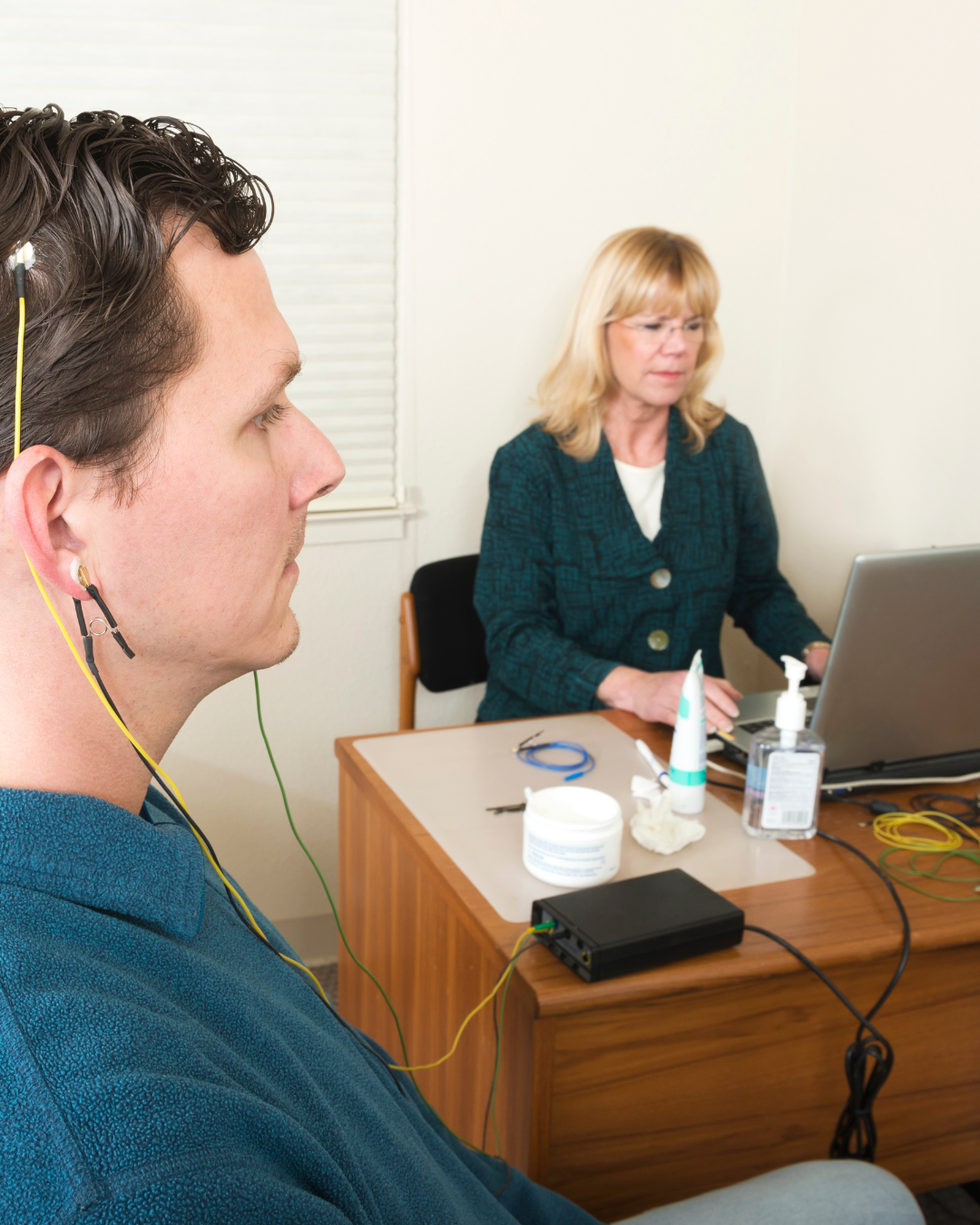
After the qEEG identifies your specific brainwave patterns, our Clinical Director designs a personalized training protocol. During sessions at our 8100 Washington Ave office, sensors on the scalp monitor brain activity in real-time while you watch a movie or play a simple game. When the brain produces the desired balanced theta/beta ratio, the screen brightens and the sound plays clearly. When it drifts toward the ADHD pattern, the screen dims.
Over 20 to 40 sessions (typically 2 to 3 sessions per week), the brain learns to sustain focused, balanced activity without external prompting. Progress is reviewed with you every few sessions, and the plan changes if nothing is moving. The approach is based on neuroplasticity, the brain’s capacity to learn, rather than medication.
Progress is objectively measured with repeat qEEG brain maps. A repeat brain map shows what the pattern is doing now rather than relying on recall. That is the reason for re-mapping: change, or the absence of it, gets measured instead of remembered.
Neurofeedback vs. Medication for ADHD
Stimulant medications (Adderall, Ritalin, Vyvanse, Concerta) work immediately but only while active in the bloodstream. When the medication wears off, the symptoms return because the underlying brainwave pattern has not changed. Common side effects include appetite suppression, insomnia, irritability, and cardiovascular concerns. Long-term dependency is a reality for many patients.
Neurofeedback takes longer to produce results (10 to 15 sessions for initial changes, 20 to 40 for a full course) but the improvements persist because the brain has been trained, not medicated. There are no systemic side effects because nothing is introduced into the body. The sensors only read electrical activity.
Many of our Houston clients use Neurofeedback as a complete medication-free alternative. Others use it alongside medication with the goal of reducing dosage over time, always in coordination with their prescribing physician. Both approaches are valid. Our Clinical Director works collaboratively with your medical team to ensure aligned care.
Neurofeedback for ADHD in Children and Teens
Parents often seek a non-medication option for their child’s attention difficulties, and with good reason. The developing brain responds exceptionally well to Neurofeedback because neuroplasticity is at its peak during childhood and adolescence. Our Houston practice works with adolescents using protocols specifically adapted for the developing brain.
The qEEG assessment is particularly valuable for children because it provides objective neurological data. Rather than relying solely on behavioral checklists and teacher reports (which cannot distinguish ADHD from anxiety-driven inattention or trauma-related cognitive difficulties), the brain map shows what is actually happening electrically. This precision prevents misdiagnosis and ensures treatment targets the real issue.
For children whose attention problems are rooted in anxiety or early adverse experiences rather than true ADHD, the brain map reveals this clearly. Treatment can then target the actual cause: EMDR for trauma-related attention problems, anxiety-specific Neurofeedback protocols for anxious inattention, or ADHD-specific training for genuine ADHD patterns.

Getting Started at Connect Clinical Services
Your first step is a comprehensive qEEG brain mapping assessment at our Houston office (8100 Washington Ave, Suite 170, Houston TX 77007). This session takes approximately 60 to 90 minutes and produces a detailed map of your brain’s electrical activity across all frequency bands and brain regions.
Based on the results, your Clinical Director designs a personalized Neurofeedback protocol targeting the specific patterns identified. He will explain what the brain map shows, what it means for your symptoms, and provide a realistic timeline for improvement.
We are a private-pay practice with transparent pricing. We provide superbills for out-of-network insurance reimbursement, and what your plan reimburses depends on your coverage. Visit our costs page for current rates or our insurance coverage page for the reimbursement process.
Call (713) 564-5146 or request a free consultation to determine if Neurofeedback is right for your ADHD. We serve clients from The Heights, River Oaks, West University, Bellaire, Memorial, Montrose, Upper Kirby, Sugar Land, Katy, The Woodlands, and all of Texas via telehealth (though Neurofeedback requires in-person sessions).


Schedule Your Free Consultation
Speak with our care team about your specific situation. No obligation. Our care team aims to call you back the same business day.
Or call: (713) 564-5146 • 8100 Washington Ave, Suite 170, Houston TX 77007
Ready to Take the Next Step?
Learn more about Neurofeedback Therapy in Houston at Connect Clinical Services, or call (713) 564-5146 for a free consultation with our care team.
Frequently Asked Questions
How much does neurofeedback for ADHD cost in Houston?
Does Neurofeedback work for ADHD?
Is Neurofeedback a replacement for ADHD medication?
How many Neurofeedback sessions does ADHD need?
Can a qEEG brain map diagnose ADHD?
Does Neurofeedback work for ADHD in children?
Is Neurofeedback safe for kids?
About the Author: Guy Bender, LPC, is the Clinical Director of Connect Clinical Services in Houston, TX. He specializes in trauma-focused therapy using EMDR, Brainspotting, Internal Family Systems, and Neurofeedback. 8100 Washington Ave, Suite 170, Houston TX 77007. (713) 564-5146.
Have More Questions?
Our care team offers a free 15-minute consultation to talk through which approach fits your situation.
Call directly: (713) 564-5146
EMDR Therapy Brainspotting Somatic Experiencing Neurofeedback Trauma Therapy PTSD Treatment Anxiety Therapy Depression Therapy Teen Therapy Couples Therapy Intensive Programs Group Therapy Our Costs Insurance FAQs Contact Us
Last reviewed April 2026 by Guy Bender, LPC, Clinical Director. Connect Clinical Services, 8100 Washington Ave, Suite 170, Houston TX 77007. (713) 564-5146.