
Connect Clinical Services | Houston, TX
OCD Treatment in Houston: Therapy Approaches That Can Help
By Guy Bender, LPC, Clinical Director | Published April 2026 | About the Author
Obsessive-Compulsive Disorder (OCD) is one of the most misunderstood mental health conditions. It is not about being neat or organized. It is a neurobiological condition characterized by intrusive, unwanted thoughts (obsessions) and repetitive behaviors or mental acts (compulsions) performed to reduce the distress those thoughts produce. OCD affects approximately 2 to 3 percent of the population, and effective treatment exists. This guide explores therapy approaches available in Houston.
Understanding OCD: Beyond the Stereotypes
OCD manifests in many forms that go well beyond the popular stereotype of hand-washing or organizing. Common OCD subtypes include contamination OCD (fear of germs, illness, or contamination), harm OCD (intrusive thoughts about harming oneself or others, despite having no desire to do so), relationship OCD (obsessive doubt about one’s relationship or partner), religious or moral OCD (scrupulosity), “just right” OCD (need for symmetry, order, or completeness), and existential or philosophical OCD.
The common thread across all subtypes is the cycle: an intrusive thought produces intense anxiety or distress, and the person performs a compulsion (physical or mental) to neutralize the distress. The compulsion provides temporary relief, which reinforces the cycle. Over time, the cycle intensifies and expands, consuming increasing amounts of time and mental energy.
OCD is a neurobiological condition, not a personality quirk or a matter of insufficient willpower. People with OCD do not enjoy their obsessions. The thoughts are distressing, unwanted, and often directly opposed to the person’s values, which is what makes them so disturbing. Brain imaging studies consistently show altered activity in specific circuits (the cortico-striato-thalamo-cortical loop) that regulate thought filtering and behavioral inhibition. This is not a willpower problem. It is a brain pattern.
Evidence-Based Therapy Approaches for OCD
Exposure and Response Prevention (ERP): The gold-standard psychotherapy for OCD. ERP involves gradually and systematically exposing the person to their feared triggers (obsessions) while preventing the compulsive response. Over time, the brain learns that the anxiety decreases naturally without the compulsion, breaking the cycle. ERP should be conducted by a therapist with specific OCD training.
Cognitive Behavioral Therapy (CBT): Often combined with ERP. CBT helps identify and challenge the cognitive distortions that fuel OCD, such as overestimation of threat, excessive responsibility beliefs, and intolerance of uncertainty. CBT provides the cognitive framework, ERP provides the behavioral intervention.
Acceptance and Commitment Therapy (ACT): Teaches acceptance of intrusive thoughts without attempting to suppress or neutralize them. ACT helps individuals build psychological flexibility and engage in values-based living despite the presence of obsessions.
How Neurofeedback and EMDR May Support OCD Treatment
While ERP and CBT remain the first-line therapeutic approaches for OCD, emerging research and clinical experience suggest that other modalities can support treatment, particularly for complex or treatment-resistant presentations:
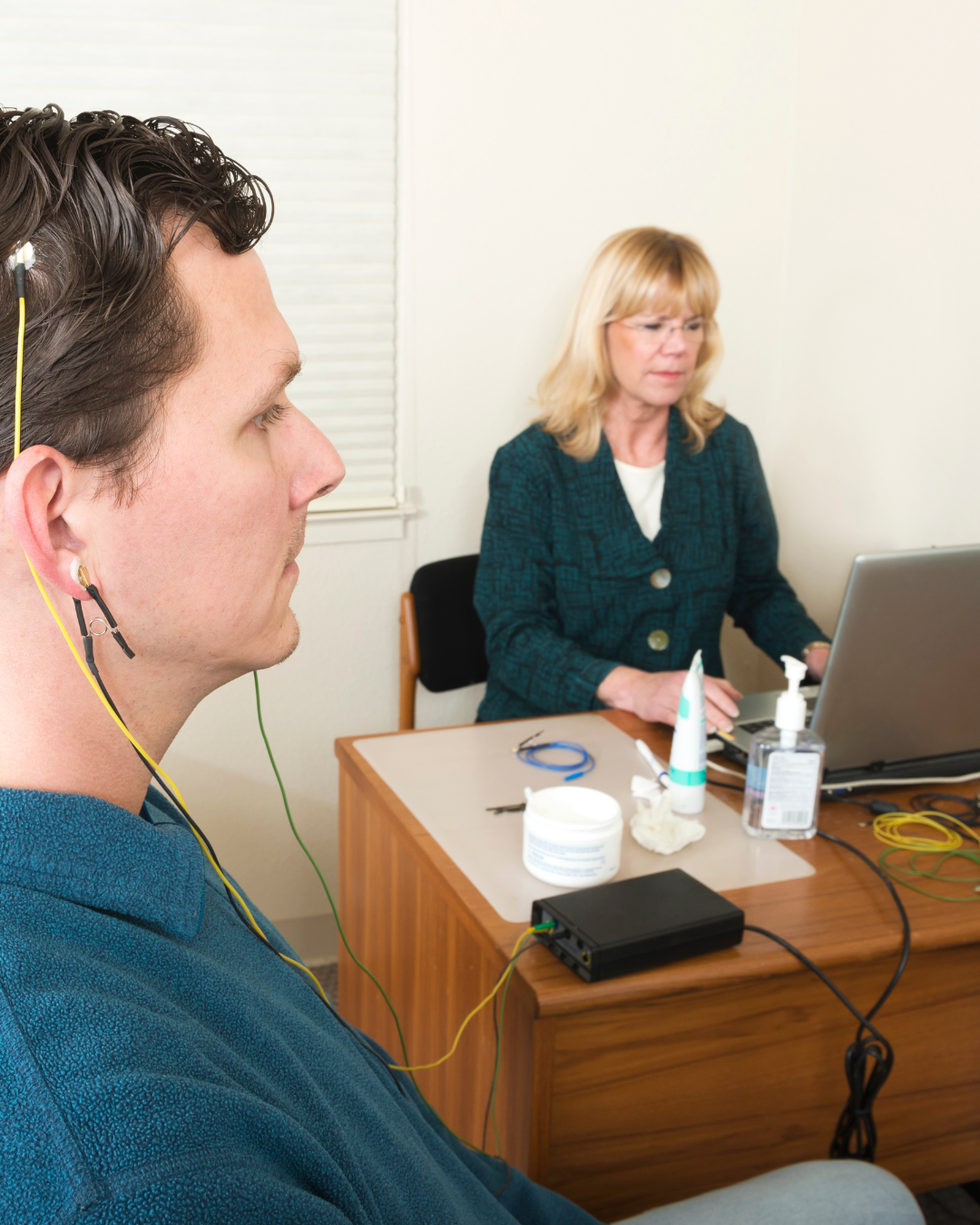
Neurofeedback: Because OCD involves identifiable brainwave dysregulation, Neurofeedback offers a potential complementary approach. qEEG brain mapping can reveal the specific neural circuit patterns associated with obsessive-compulsive cycles, and targeted brain training may help regulate these patterns. Research in this area is growing, and Neurofeedback is not currently considered a standalone OCD treatment, but it may support overall nervous system regulation when combined with ERP and CBT.
EMDR Therapy: For individuals whose OCD has roots in traumatic experiences, or where trauma and OCD co-occur, EMDR can be valuable. Processing the underlying traumatic material may reduce the overall anxiety load that fuels obsessive-compulsive patterns. EMDR is not a primary OCD treatment, but it can address contributing factors that ERP alone may not reach.
Somatic Experiencing: OCD produces intense physiological activation. Body-oriented approaches can help regulate the nervous system’s threat response, potentially reducing the intensity of the anxiety that drives compulsive behaviors.
When OCD Co-Occurs with Other Conditions
OCD frequently co-occurs with other conditions that may require integrated treatment: depression (affects up to 67 percent of people with OCD), anxiety disorders including social anxiety and generalized anxiety, PTSD and trauma-related conditions, ADHD (attention difficulties can worsen OCD by reducing the ability to redirect attention away from obsessions), and eating disorders.
When OCD co-occurs with trauma, treatment sequencing becomes important. A clinician who understands both OCD and trauma can determine whether to address the OCD cycle first (with ERP), the underlying trauma first (with EMDR or Brainspotting), or both simultaneously. At Connect Clinical Services, our Clinical Director has experience working with complex presentations where multiple conditions interact.
Finding OCD Treatment in Houston
If you suspect you may have OCD, the first step is a thorough assessment by a mental health professional with specific OCD experience. Not all therapists are trained in ERP, and receiving the wrong type of therapy for OCD (such as traditional talk therapy focused on exploring the content of obsessions) can actually reinforce the cycle rather than break it.
When evaluating OCD treatment providers in Houston, ask: Are you trained in Exposure and Response Prevention? What percentage of your caseload involves OCD? How do you handle treatment-resistant cases? Do you coordinate with psychiatrists for medication management when needed?
At Connect Clinical Services (8100 Washington Ave, Suite 170, Houston TX 77007), we offer Neurofeedback, EMDR, Brainspotting, and Somatic Experiencing as components of comprehensive mental health treatment. If you are experiencing OCD symptoms alongside anxiety, depression, or trauma, a free consultation with our care team can help you talk through whether our approaches may be appropriate for your needs. Call (713) 564-5146 or request a consultation.




Schedule Your Free Consultation
Speak with our care team about your specific situation. No obligation. Our care team aims to call you back the same business day.
Or call: (713) 564-5146 • 8100 Washington Ave, Suite 170, Houston TX 77007
Ready to Take the Next Step?
Learn more about Anxiety Therapy in Houston at Connect Clinical Services, or call (713) 564-5146. Serving The Heights, River Oaks, Memorial, and all of Houston. Visit our FAQ page for more answers.
Frequently Asked Questions
What is the best therapy for OCD?
Can EMDR help with OCD?
Does Neurofeedback work for OCD?
How long does OCD treatment take?
Can OCD go away on its own?
What types of OCD exist?
About the Author: Guy Bender, LPC, is the Clinical Director of Connect Clinical Services in Houston, TX. He specializes in trauma-focused therapy using EMDR, Brainspotting, Internal Family Systems, and Neurofeedback. 8100 Washington Ave, Suite 170, Houston TX 77007. (713) 564-5146.
Have More Questions?
Our care team offers a free 15-minute consultation to talk through which approach fits your situation.
Call directly: (713) 564-5146
EMDR Therapy Brainspotting Somatic Experiencing Neurofeedback Trauma Therapy PTSD Treatment Anxiety Therapy Depression Therapy Teen Therapy Couples Therapy Intensive Programs Group Therapy Our Costs Insurance FAQs Contact Us
Last reviewed April 2026 by Guy Bender, LPC, Clinical Director. Connect Clinical Services, 8100 Washington Ave, Suite 170, Houston TX 77007. (713) 564-5146.
Related reading
What specialised support for bipolar disorder involves.
The eight phases, in plain language.